
Trading Journal for Mental Discipline: A Practical Framework
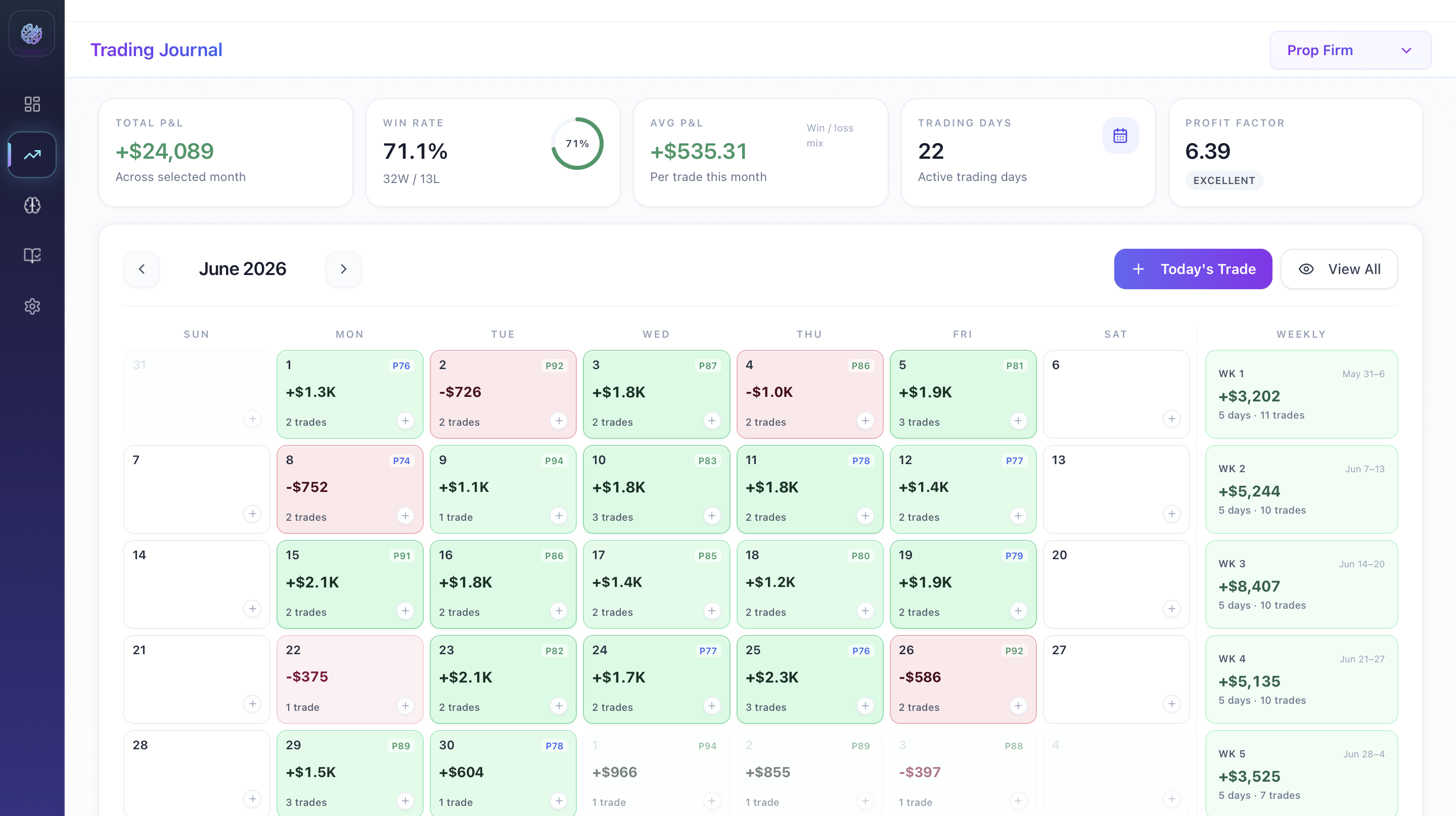
Most trading journals fail for the same reason most habits fail. There's no structure behind them, so they turn into a pile of scattered notes that never actually change behavior. If you want a trading journal to build real mental discipline instead of just logging what already happened, it needs a framework, not just a notebook.
Here's a practical one you can start using today.
Start with rules, not reflections
Before you log a single trade, write down the rules you are actually trying to follow. Your maximum position size, the conditions that qualify as a valid setup, and the specific situations where you are not allowed to trade at all, such as after two consecutive losses or when you slept less than five hours. These rules become the standard every entry in your journal gets measured against.
Without clear rules written down in advance, a journal just becomes a diary. With them, it becomes an accountability system.
Log the decision, not just the outcome
For every trade, record two separate things. First, whether you followed your own rules, yes or no, with no exceptions for good outcomes. A rule broken that happened to make money is still a broken rule, and pretending otherwise is exactly how discipline erodes over time. Second, record the outcome itself, profit or loss, so you can eventually compare rule following against results.
This separation matters more than it sounds. A trader who only tracks outcomes starts unconsciously rewarding themselves for lucky rule breaks, which quietly trains exactly the wrong behavior.
Build in a same-day recap
At the end of each session, spend two or three minutes on a short recap. What went according to plan, what didn't, and why. Keep this brief and honest rather than long and defensive. The goal is pattern recognition over time, not a detailed essay every single day.
Run a weekly review, not just daily entries
Daily entries alone rarely reveal patterns, because a single day of data is just noise. Once a week, go back through everything you've logged and look specifically for repeated rule breaks, repeated emotional triggers, or repeated conditions that led to your worst sessions. This weekly step is where a trading journal actually starts improving your discipline, because it's where the patterns finally become visible. Pair this with a trading psychology journal and the full picture gets clearer faster.
Close the loop with accountability
A framework without accountability tends to quietly fall apart after a few weeks. Build in some form of check, whether that's reviewing your journal with a mentor, a trading community, or simply a standing weekly appointment with yourself where skipping it isn't an option. The discipline of reviewing the journal consistently is often more valuable than any single insight it produces.
Where this connects to MentalBro
This entire framework works, but doing it manually takes real consistency, and many traders quietly drop it within a month. Tracking your trading psychology in one place ties these habits together over time. MentalBro supports the same pieces in one workflow—readiness checks, rule tracking, after-trade reflection and recaps—so you can review patterns without maintaining separate spreadsheets. You still log trades and reflections yourself; the structure is what keeps the accountability loop intact on days when a full manual review is the last thing you feel like doing.
If your journal has turned into a pile of unreviewed notes, this framework is the fix. Start simple, stay consistent, and let the weekly review do the heavy lifting. For pre-session discipline, see our pre-trade mental checklist.
Related reading
Want accountability built into your journal workflow?
Track readiness, rules and recaps in one place with MentalBro.
Start tracking for freeShare this article
Help other traders master their psychology