
How to Keep a Trading Psychology Journal (Step by Step)
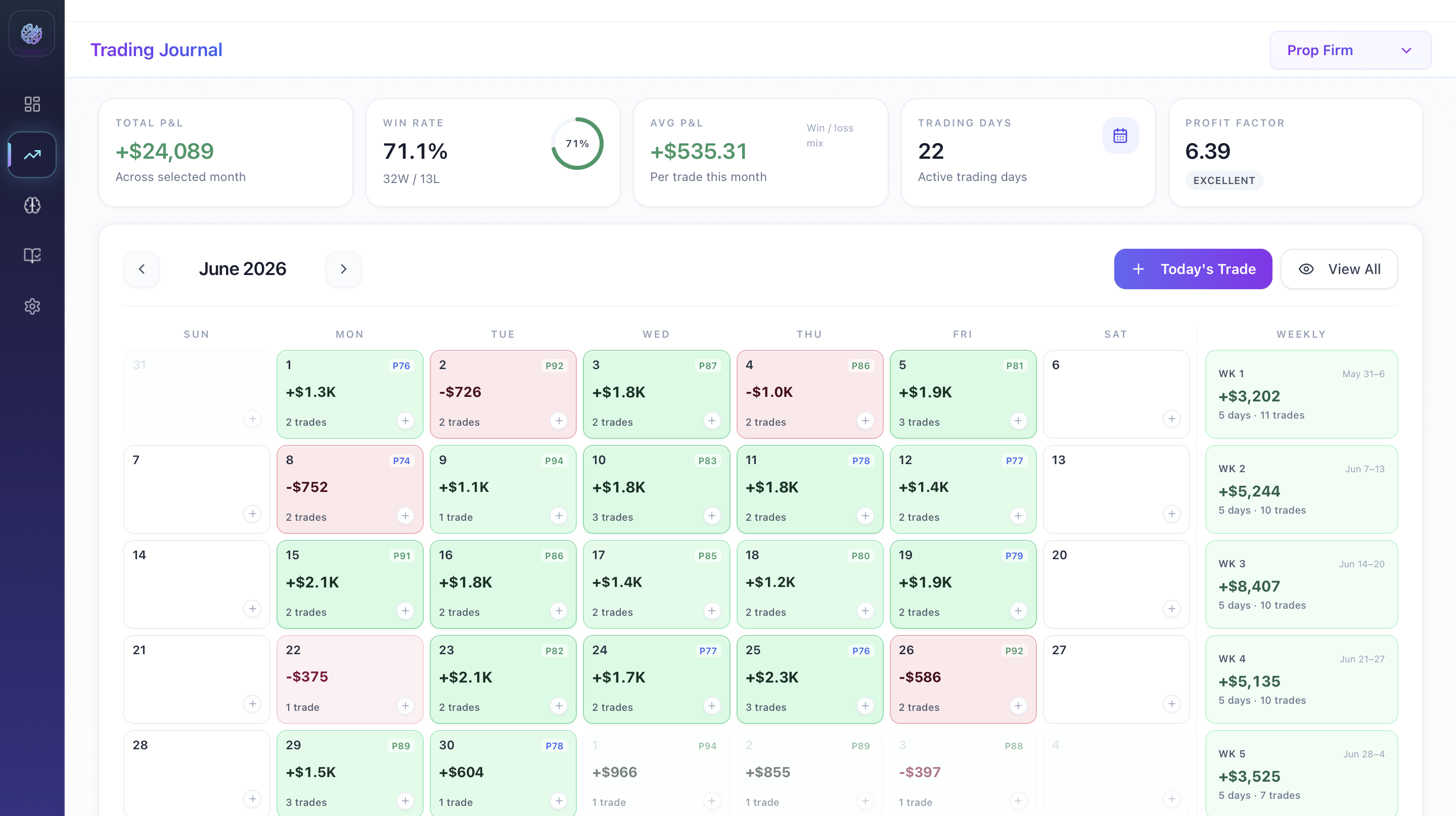
Most traders keep a journal of some kind. Entry price, exit price, position size, profit or loss. That record is useful, but it usually begins after the decision is already made. It tells you what happened—not the focus, fatigue, frustration or rule breaks that shaped the session.
A psychology-first journal closes that gap by tracking readiness, emotions, discipline and execution alongside your trades so repeated patterns become visible over time. This article covers the routine — what to record at each stage of a session and how to review it. For the full explanation of the format and how MentalBro implements it, see the trading psychology journal overview.
Start with the gap a trade log leaves behind
A psychology journal is a structured record of the mental and behavioral conditions around your trading—not just the trades themselves. It captures how prepared you were before the open, how you felt during the session, whether you followed your rules, and what you noticed after each trade.
The purpose is not to replace your strategy or risk management. It is to make the hardest part of trading—your own behavior—easier to review honestly instead of reconstructing it from memory after a frustrating week.
What to track before, during and after a session
Before the session
- Sleep, fatigue and general stress level
- Focus and clarity going into the open
- Preparation: plan reviewed, levels marked, rules restated
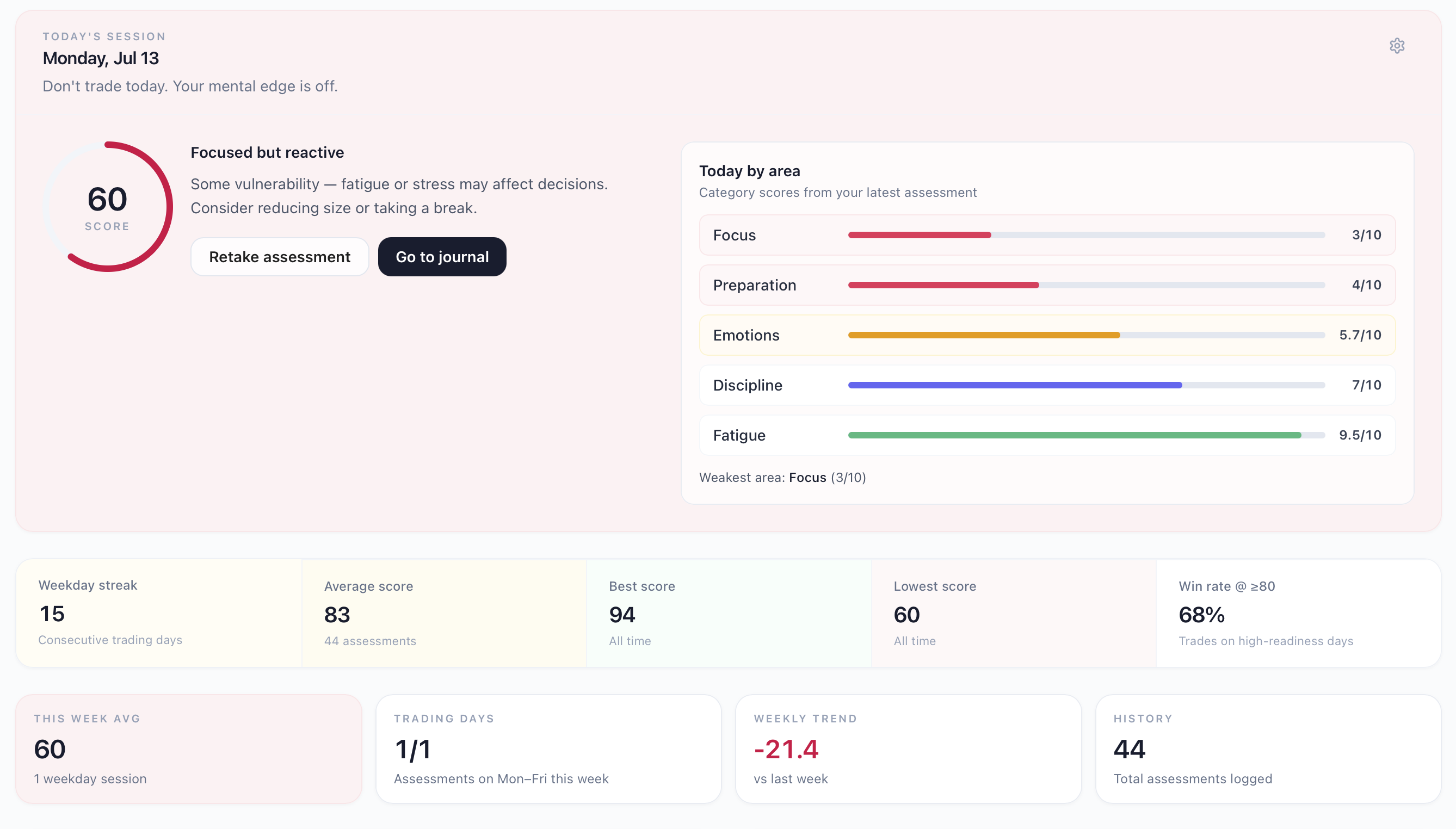
- A short readiness check—try the free Mental Readiness Assessment for a preview
During the session
- Whether each trade matched your plan or was reactive
- Rule adherence and position sizing discipline
- Emotional shifts after wins, losses or missed moves
After the session
- After-trade reflection on execution quality—not just P&L
- Daily recap: what supported discipline, what did not
- Weekly review of repeated patterns across days
Traditional journal vs psychology-first journal
| Topic | Traditional trading journal | Psychology-first journal |
|---|---|---|
| Primary focus | Entries, exits, P&L | Readiness, emotions, rules, execution |
| Timing | Mostly after trades | Before, during and after the session |
| Main question | What was the result? | Was I in a state to execute my plan? |
| Pattern discovery | Setup stats, win rate by strategy | Personal patterns (sleep, stress, rule breaks vs outcomes) |
| Risk note | Does not explain execution mistakes | Does not prove psychology caused every loss |
How MentalBro's workflow fits the trading day
- Before trading: Mental Readiness Assessment and pre-trade checklist
- During trading: Journal entries, rule tracker and trade logging
- After each trade: After-trade assessment on execution and emotions
- End of session: Daily recap and notes
- End of week: Weekly recap and psychology analytics
Who MentalBro is designed for
- Traders who already have a strategy but struggle with consistent execution
- Traders who want to connect readiness and emotions with rule adherence over time
- Traders willing to log honestly before, during and after sessions
- Prop and independent traders reviewing weekly patterns—not chasing signals
Who MentalBro is not designed for
- Traders looking for buy/sell signals or market predictions
- Anyone expecting guaranteed profitability from journaling alone
- Traders who want a passive log with no daily reflection habit
- Users who need automated broker psychology import without manual input
Honest limitations
MentalBro does not replace a tested strategy, position sizing plan or professional advice. It does not block trades, predict outcomes, or claim that every loss is psychological.
You enter trades, assessments and reflections yourself. The value comes from consistent use and reviewing your own repeated patterns—not from a single score on one day.
Further reading
- Trading mindset tracker— track mental state across sessions
- Pre-trade mental checklist— questions before you click buy or sell
- Trading discipline journal framework— structure for accountability loops
- Emotional trading patterns— common behaviors worth reviewing
Frequently asked questions
- Is a trading psychology journal the same as a normal trading journal?
- Not exactly. A traditional journal focuses on trade outcomes—entries, exits and P&L. A psychology-first journal also records readiness, emotions, rule adherence and execution context so you can review patterns across sessions.
- Does tracking emotions prove they caused a loss?
- No. Seeing that frustration appeared on the same day as poor execution is useful context, but correlation is not proof of cause. The goal is to spot repeated personal patterns worth testing with clearer rules—not to blame every loss on psychology.
- Can MentalBro predict whether my next trade will win?
- No. MentalBro does not predict markets or guarantee profitability. Readiness scores and journal entries help you decide whether your current state supports disciplined execution.
- Does MentalBro block me from trading when readiness is low?
- No. MentalBro does not prevent or physically block access to your broker. It creates deliberate checkpoints and a record you can review so you can make your own risk decisions.
- Do I need to enter everything manually?
- You still log trades, assessments and reflections inside MentalBro. Over time, the app helps you compare readiness, emotions, rules and execution with your results—you are not passively importing broker psychology data.
Related reading
Start building a psychology-first journal record
Track readiness, emotions, rules and execution alongside your trades with MentalBro.
Start tracking for freeShare this article
Help other traders master their psychology