
Pre-Trade Mental Checklist: 7 Questions to Ask Before You Enter a Trade
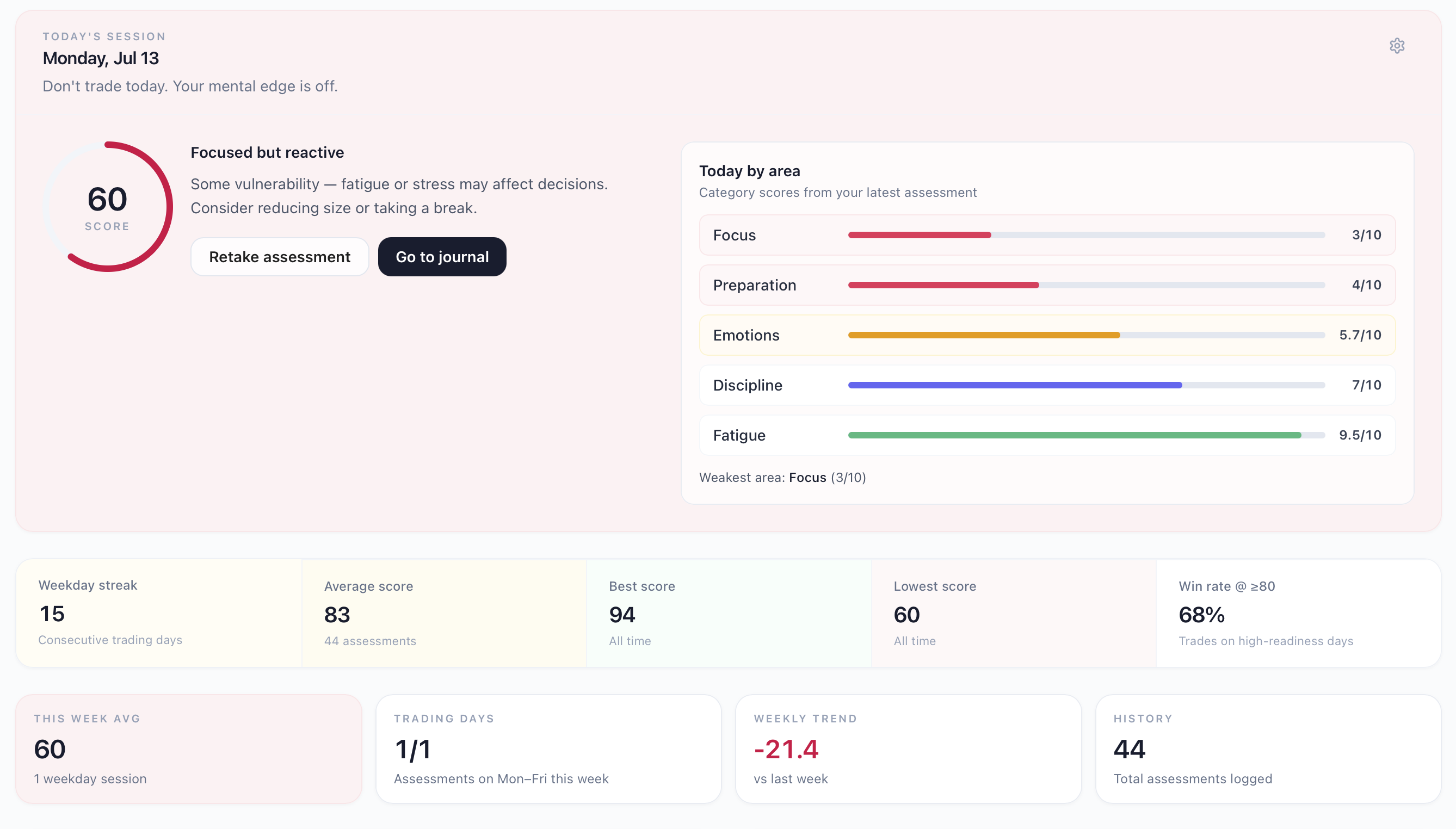
It's rarely the setup that's the problem. Most traders can point to a technically valid pattern on the chart even for their worst trades of the month. What actually went wrong is usually simpler and harder to admit: they weren't mentally ready to trade in the first place.
A pre-trade mental checklist helps you pause before acting—not after your account statement tells the story. Run through these seven questions before your next trade, or start with the free Mental Readiness Assessment.
1. Did I get enough sleep last night
Poor sleep is often associated with impulsive decisions and late reactions in many traders' journals—not as proof that sleep caused a loss, but as a risk factor worth noting.
2. Am I trading this setup or am I trading fear of missing out
There's a real difference between a setup you planned for and a move you are chasing because it already happened without you. If you're only noticing the opportunity because price already moved, be honest about which one this is.
3. Is this trade part of my plan or am I improvising
A trade that fits your predefined strategy and a trade you are making up on the spot carry very different risk profiles, even if they look similar on the chart. Know which one you're about to take.
4. How stressed do I feel right now, on a simple scale
Stress from outside the market, or stress carried over from a recent loss, tends to push traders toward oversized positions and early exits. A quick honest number here tells you a lot about how much you should trust your next decision.
5. Am I trying to win back a previous loss
Revenge trading rarely announces itself. It usually feels like conviction. If your last trade lost money and this new trade feels unusually urgent, that's worth pausing on before you enter.
6. Do I actually believe in this setup, or do I just want a trade to be in right now
Boredom and the urge to be doing something are two of the most common reasons traders take weak setups. Separate genuine conviction from the itch to just be in a position.
7. If this trade goes against me immediately, do I know exactly what I'll do
If you can't answer this clearly before entering, that's usually a sign you're not actually ready for the trade yet, regardless of how good the setup looks.
Why this works
None of these questions are complicated. That's the point. The goal isn't deep psychological analysis before every single trade, it's a fast honesty check that takes less than a minute and catches the sessions where you are mentally set up to make expensive mistakes. Combine this with a trading mindset tracker and you can review which checklist answers tend to show up on your most difficult sessions.
Building this into your routine
The simplest way to use this is a short pre-trade template you run through before the market opens and again before any trade you're unusually excited about. Keep it visible, keep it short, and actually answer honestly rather than rushing through it as a formality.
MentalBro builds this exact kind of check directly into your daily routine, turning it into a quick pre-trade assessment that feeds into your overall Psych Score, so the habit sticks instead of fading after a week like most manual checklists do. The checklist result is stored in your trading mindset journal alongside the session. For the full picture on why mental tracking matters, read our guide on trading psychology journaling and the core psychological dimensions of trading.
Related reading
Want a pre-trade check that takes less than a minute?
Use MentalBro's readiness flow and build a checklist habit that sticks.
Start tracking for freeShare this article
Help other traders master their psychology