
Trading Mindset Tracker: How Mental State Relates to Your Results
Ask most traders what caused their worst loss of the month and you'll get a technical answer. Wrong entry, bad stop placement, ignored the trend. Rarely do traders point to the real root cause: they were mentally in the wrong place to be trading that day at all.
A trading mindset tracker exists to catch that before it costs you money, not after.
Why mental state often matters as much as the setup
Two traders can look at the exact same chart, the exact same setup, and make completely different decisions based on nothing but their mental state in that moment. A trader who is calm, rested, and confident tends to wait for confirmation and size positions sensibly. The same trader running on four hours of sleep and carrying frustration from yesterday's loss is far more likely to jump in early, oversize the position, or exit at the first sign of discomfort.
The setup did not change. The trader did. This is why traders who consistently track their mindset alongside their results tend to notice something uncomfortable: their worst trading days are rarely explained by bad setups. They are explained by low energy, high stress, or an emotional state that made discipline harder than usual.
What a mindset tracker actually measures
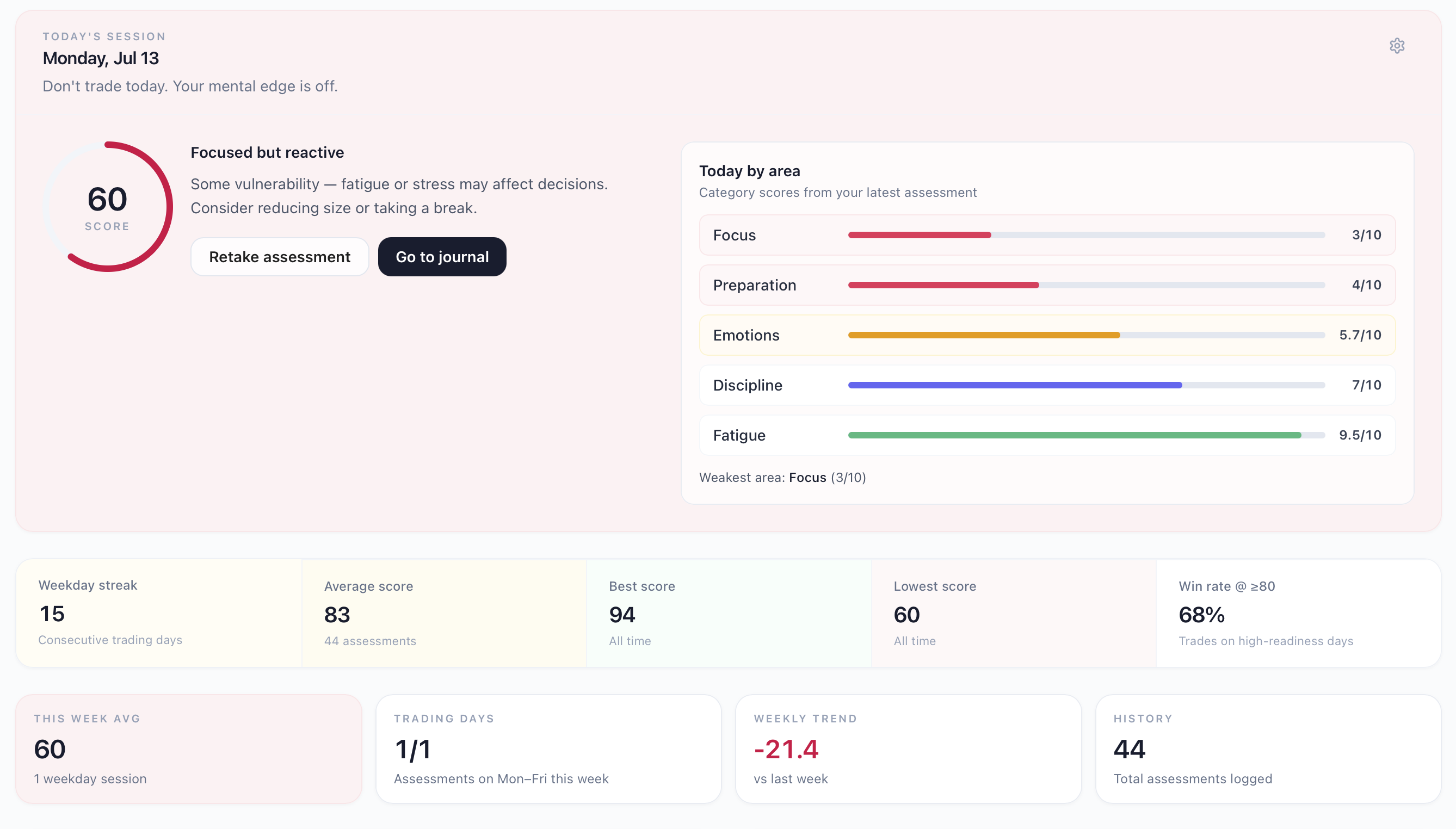
A useful mindset tracker goes beyond a vague "how do you feel today" question. It measures a small set of specific, repeatable variables: focus level, confidence level, emotional state, and physical or mental energy. Each one gets scored consistently, day after day, so you can actually compare Tuesday to last Tuesday instead of relying on memory.
The value is not in any single day's score. It's in the pattern that emerges once you have thirty or sixty days of data sitting next to your actual trading results. A trading psychology journal helps capture the narrative; a mindset tracker gives you the numbers to compare over time.
Why random notes don't work
It's tempting to think a quick mental note each morning is enough. In practice, unstructured notes rarely get reviewed and almost never get compared against results in a consistent way. A trader might vaguely remember feeling off on a bad day, but without a repeatable score and a journal that lines that score up with trades and P&L over time, the pattern stays easy to miss.
Consistent, quantified tracking is what turns a vague feeling into something you can review honestly—without assuming every loss was caused by psychology.
A simple before and after
Imagine two sessions. On one, the trader logs low energy, high stress, and low confidence before the market opens. On the other, the same trader logs solid sleep, low stress, and genuine confidence in the setups they are watching. Traders who track this consistently often find the first type of session produces far more impulsive trades, more deviations from plan, and worse results overall, even when the market conditions were similar on both days.
Once you can see that pattern clearly, the fix becomes obvious: on low score days, reduce size, tighten your rules, or simply sit out. That's a decision you can only make with confidence if you are actually tracking your mindset instead of guessing at it after the fact. Running a pre-trade mental checklist before each session makes low-score days easier to catch early.
Getting started
You can begin manually with a simple daily scorecard covering focus, confidence, emotional state, and energy, each rated on a basic scale. It's better than nothing and will start showing you patterns within a couple of weeks.
MentalBro helps you log a daily readiness score from a short check-in and review it alongside your trades and journal entries over time. You still enter trades and reflections yourself—the value comes from comparing repeated patterns, not from assuming one score predicts your next result. For a broader framework, see our guide on building a trading psychology journal.
Related reading
Want to track mindset alongside your sessions?
Use MentalBro to log readiness and review patterns over time.
Start tracking for freeShare this article
Help other traders master their psychology